
Hearing as Inherited Knowledge
Bird BoxThis flow traces how sound becomes the family’s substitute map and how the children turn training into expertise.
increasing Bearing strength in each event
 decreasing
Bearing strength in each eventdecreasingThe First Forest Lessons
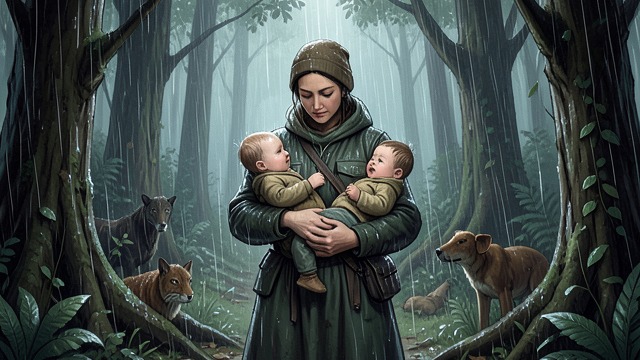
The First Forest Lessons
Sounds Named
Malorie carries the babies near the woods and describes leaves, rain, and animals.
She teaches them to connect sounds with possible sources.
A New Sensory Education
The lessons begin before the children can fully understand them.
Their education develops around uncertainty rather than direct observation.
Sound Exercises
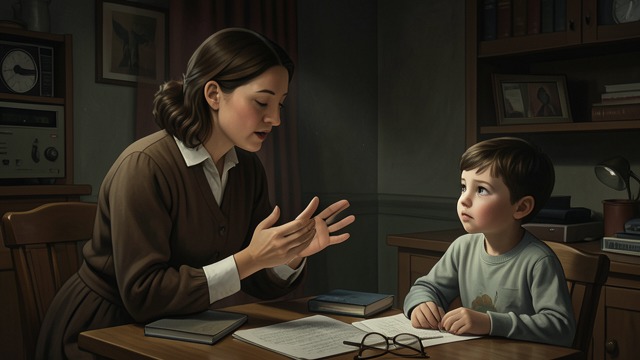
Sound Exercises
Memory and Attention
Malorie asks the children to recall a sequence of sounds she makes around the house.
Boy begins noticing unintended details as well as deliberate noises.
A Different Competence
Their listening becomes more precise than Malorie’s own hearing.
The children gain an ability that can guide them beyond their mother’s limited sensory experience.
The Boat’s First Guide
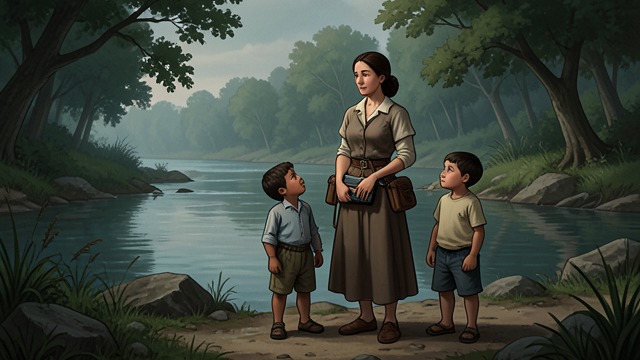
The Boat’s First Guide
Listening Beyond Water
Malorie asks the children to report movement in the woods and river.
Birds, splashes, and broken branches become navigational information.
Dependence on the Children
Malorie cannot see the banks or judge distance directly.
Their hearing makes the family’s escape possible, but also places adult responsibility on them.
The Unknown Sound
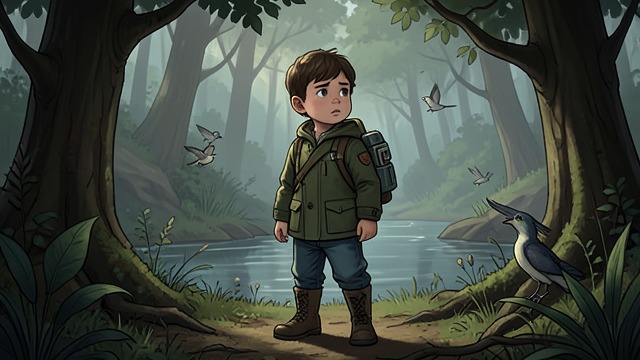
The Unknown Sound
A Limit Reached
The Boy hears a pursuit but cannot identify whether it is human or animal.
His uncertainty frustrates him because he has rarely failed before.
Listening Is Not Omniscience
Malorie asks him to keep trying without pretending he knows.
The moment distinguishes careful attention from the impossible promise of perfect information.
Recognizing Tom’s Voice
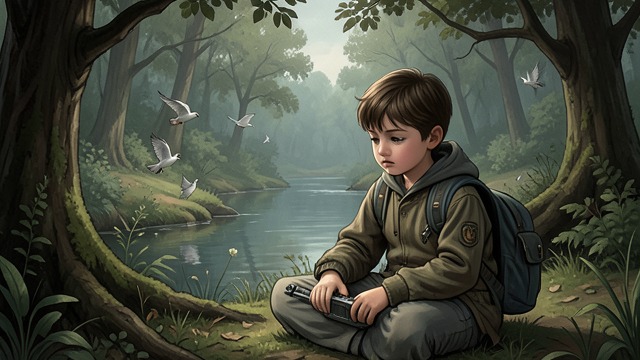
Recognizing Tom’s Voice
A Sound from the Past
The Boy identifies Tom’s recording amid the falling birds and river noise.
He repeats the message’s address and the speaker’s name.
Hearing Guides Sight
The family reaches the point where Malorie must look briefly.
The children’s auditory knowledge makes the final visual choice possible.
When the children are babies
When the children are toddlers
During the opening hours on the river
During the later river passage
At the channel split
